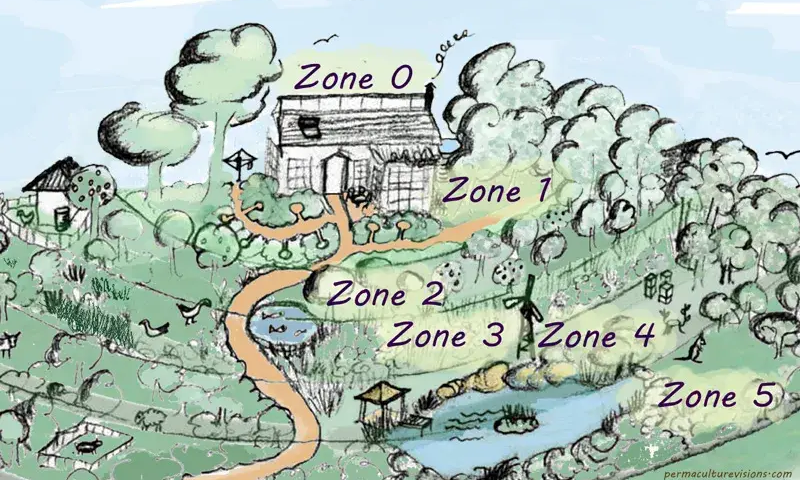
Zoning is a spatial planning strategy that divides a site into different areas based on their frequency of use, energy needs, and maintenance requirements. The zones are typically numbered from 0 to 5, with Zone 0 being the center of human activity (usually a home) and Zone 5 representing wilderness or minimally managed areas. The goal is to position elements within the landscape in a way that optimizes human effort and natural energy flows.
The Zones in Permaculture
Zone 0: The Home Zone 0 is the heart of the permaculture design, the main living area. It is where the most human activity occurs. Sustainable practices in Zone 0 may include energy-efficient appliances, rainwater harvesting systems, and solar panels.
Zone 1: Immediate Surroundings Zone 1 is the area closest to the home and is visited frequently, often multiple times a day. This zone typically includes:
- Kitchen gardens for herbs, vegetables, and salad greens
- Compost bins
- Rainwater collection tanks
- High-maintenance plants or animals, such as chickens or rabbits
Because of its proximity, Zone 1 is ideal for activities requiring regular attention.
Zone 2: Managed Production Area Zone 2 is slightly further from the home and includes areas that require less frequent care. Examples include:
- Orchards
- Larger vegetable patches
- Beehives
- Small ponds or aquaculture systems
Elements in Zone 2 are generally visited weekly or a few times a week.
Zone 3: Farming and Larger Scale Production Zone 3 focuses on larger-scale production with minimal daily input. This zone might feature:
- Grain crops
- Pastureland for grazing animals
- Larger water reservoirs
- Orchards
Zone 3 is designed to be productive with minimal intervention, relying more on natural cycles and sustainable practices.
Zone 4: Semi-Wild Areas Zone 4 is a transitional area between managed land and wilderness. It is used for:
- Harvesting wild resources such as timber, firewood, or forage
- Rotational grazing of livestock
Zone 4 typically requires seasonal visits and minimal management.
Zone 5: Wilderness Zone 5 is left untouched and acts as a natural ecosystem. It is a space for:
- Observation and learning from nature’s processes.
- Preserving biodiversity.
- Providing habitat for wildlife.
This zone is vital for understanding how natural systems function and for maintaining ecological balance.
The zones are not isolated; they interact and support each other to create harmonious, sustainable systems. For example: Zone 1’s composting can nourish the gardens in zone 2, or the orchards in zone 3. Harvested wood from zone 4 can be stored in zone 2 for use as firewood in zone 0.
Zoning is a cornerstone of permaculture design that helps create harmonious and efficient systems. By understanding the needs of each element and their interactions within the landscape, zoning allows for the sustainable integration of human activity with nature. Whether you are designing a small backyard garden or a large-scale farm, zoning provides a practical framework for creating resilient ecosystems that benefit both people and the planet.
amazing post!!! thank you for your research