
Soil microbiology is the study of the microscopic population of soil or loose substrate that is responsible for many transformations taking place within the soil environment.
Petya Ivanova, an expert in soil microbiology, came to visit us in Shipka and introduced us to the physiology of plants and the biological aspect of soil. She taught us the differences between regenerative and conventional agriculture, in which there is little interaction with the ecosystem and the focus is only on production.
Nature has a biological structure based on cycles filled with biodiverse life. Conventional agriculture or monoculture does not preserve these cycles, they obstruct them. When we till and use fertilisers, we disturb the soil structure, creating a constant fight with nature instead of observing and understanding it.
When we observe the different layers of the soil, we understand the first 10 to 20 centimetres are where we find the most intense biological processes, and where we interact the most. To ensure a healthy soil five principals need to be followed:
-
- Zero tillage
- Keep the soil covered
- Diversity and crop rotation
- Photosynthesis and living root maximization
- Cover crops mixes
The structure of the soil depends on what is growing above and below it, as diverse root systems bring different nutrients that the soil needs to be healthy. Petya taught us that compost is a good way to help the soil and correct the damage caused by monoculture faster by increasing microbiological life.
Hot compost process :
Hot composting is an exothermic (energy releasing) and aerobic (with oxygen) microbiological process needing both green and brown materials.
Green materials contain nitrogen found in fresh, green vegetation, vegetable scraps and manure. Brown materials contain carbon found in autumn leaves, straw, making up the bulk of the compost and helping to keep the pile aerated. The compost pile must be turned, watered regularly and protected against the weather to ensure the high temperatures needed for thermophilic microorganisms to thrive.
Petya made a technological plan for the hot compost in Shipka, taking into account the materials close at hand.
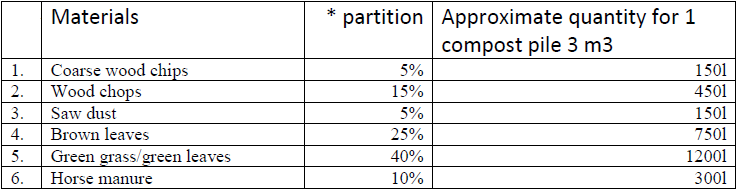
Once we had all the components together, we started layering materials, alternating those rich in nitrogen and carbon. Within 12 hours of creating the compost pile temperatures measured between 65-68°С and up to 65°С within the first 24 hours. This first hot stage of the compost requires more attention as it needs to be turned and humidity levels controlled to ensure the temperature does exceed 72°C. Anything above would kill the microorganisms needed to create healthy compost.
During the summer, it was difficult to maintain the humidity level of the compost. We decided to move it to a sheltered area and spray it with a mix of water and liquid humic acid that improves soil nutrient availability and uptake. We used a microscope to analyse the compost and saw the presence of microorganisms, a sign of a successful compost.
Our objective is to create a compost tea, a regenerative solution created by filtrating the compost with water.
The Orchards
As well as creating the compost we planted six hundred apple and pear trees in four different orchards near Shipka. Every tree was separated from each other by two meters, and the grass in between left to grow to promote biodiversity and keep the beneficial insects nearby. We set up an irrigation system using water from the river, placing a metal cylinder to capture the water at a high point in the river. We hope to use the compost tea solution to maintain good soil health and in parallel, a better quality of life for our trees.
Its use in orchards will make it possible to integrate more microorganisms, enrich the soil and provide all the nutrients necessary for the proper development of trees.