
After almost one year living in Bulgaria, time has come for me to reflect on what I enjoyed the most in this country and what I don’t like about it.
So, here are the 5 Bulgarian things I appreciated the most:
- Nature
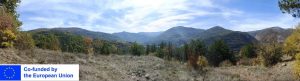
Nature in Bulgaria really surprised me. The mountains, the lakes, the Black Sea… Pirin, Stara Planina, Vitosha, Rila and Rhodope are the must-sea mountain ranges of Bulgaria. The natural sites I visited were all very clean and well-preserved.
- “Banitsa” and “sirene”
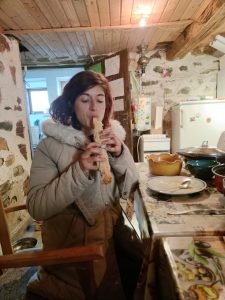
If you like cheese, you should try “sirene”, a brined cheese similar to Greek “feta”, but saltier. It’s used to make “banitsa”, a traditional Bulgarian pastry with whisked eggs, cheese, yogurt and filo pastry. You can also taste the sweet version of it, with apples, walnuts and cinnamon or with pumpkin.
- Trains

My experience with Bulgarian trains was really good. In one year of trips across Bulgaria, I only had one long train delay. Trains were on time, never cancelled and I could find toilet paper, water and soap almost in every train toilet. Moreover, if you don’t have your ticket with you on board, instead of having a hefty fine you can buy it by cash by the ticket collector.
- Permaculture eco-communities

A whole universe of eco-communities exist both in Bulgaria and Italy, my home country, and I was totally unaware of it before joining “Open Mind” Organization in Shipka. I also had the occasion to visit “Trinoga Association” and the “Green Association”, as these eco-villages form a network where exchanges and help are possible. In this context, I experienced a completely different way of living, which is non-capitalistic, healthy, ecological and social.
- Spirituality

Self-development and spirituality are two pillars in the eco-communities. Nevertheless, this is not the only spiritual setting I found in Bulgaria. Indeed, I came across a spiritual movement founded in Bulgaria in 1897 by Peter Dunov, the “Universal White Brotherhood”. So, I had the possibility to join on “Madera Plateau” the “Paneurhythmy”, a harmonious dance with musical accompaniment. In this occasion, every participant is white-dressed and joins one of the two concentric circles to dance. I also had the occasion to visit Peter Dunov’s tomb in Sofia and to go to
“Wake Up” Festival, a holistic festival in Rhodope Mountains.
As you see, Bulgaria has a lot to offer. However, I didn’t appreciate everything in this country, so now it’s time to share 5 things I didn’t like here:
- Non-English speakers
It’s really hard to communicate with locals if you don’t speak Bulgarian, as most of Bulgarians are not English speakers. In big cities it’s much easier to have a conversation, but in little towns it’s possible only if you speak Bulgarian or Russian. Sometimes I managed to do it with “Google Translate”, gestures, drawings, facial expressions… or a meditator who could speak Bulgarian.
- Coffee machines
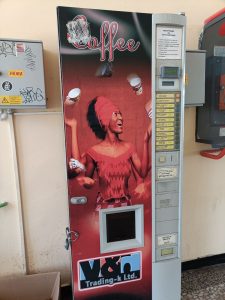
You can find coffee machines literally everywhere in Bulgaria. From the little village to the hut on top of the mountain, you can have a coffee. I don’t understand this obsession of Bulgarians with (almost always) low-quality coffee.
- Plastic waste
Plastic waste is really a problem in Bulgaria, as you receive plastic bags and straws much more than it is needed. This reminded me of the huge amounts of plastic garbage I saw in Greece, unfortunately.
- Smoking indoor
Despite it is forbidden in EU countries, people were smoking indoor in some bars and restaurants I went to. I believe it is terrible both for the lungs and the planet and reminded me of Italy before 2003 (when the law that banned smoking indoor was introduced).
- Slot machines
Casinos, slot machines and betting shops are widely spread across the country. I find it very sad, as betting is seriously damaging people’s mental health and wealth, especially in one of the poorest country in Europe.
These were the positive and negative aspects I came across in Bulgaria. If you’re curious to experience them, I wish you a nice trip to this country!
Lovely write-up — the mountains and the banitsa are exactly what people remember years later. Having watched a lot of volunteers and students arrive for a year, the thing that most often shapes the experience is housing, so it deserves a line for anyone reading this before they come.
Long-term rentals here are usually one-year contracts with a month of deposit, and often a month to the agent on top. Many landlords advertise only in Bulgarian, and asking a local friend or colleague to call on your behalf tends to get a noticeably better price than enquiring in English. Negotiating is normal too, especially outside the summer season, when owners would rather have a reliable tenant than an empty flat.